Why Better Review Starts Earlier
September 17, 2026
By:
Get the latest insights
EDRM 2.0 reflects a fundamental shift in discovery: The intelligence that makes document review faster, more focused, and more valuable now begins long before document review itself.
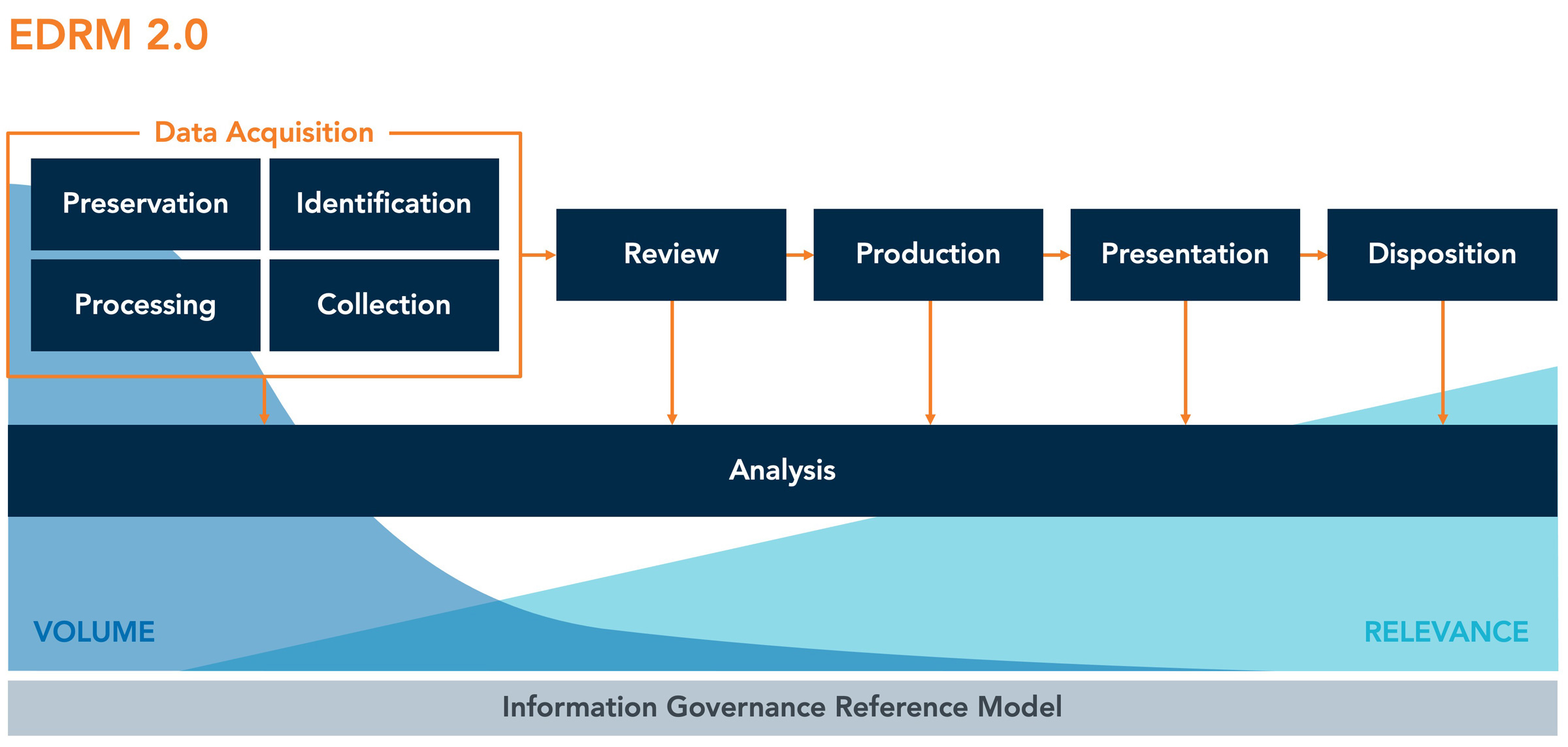
For more than two decades, the Electronic Discovery Reference Model has provided a shared framework for understanding how information moves through discovery. Its latest evolution reflects how AI and modern data are shifting where and how that work gets done.
EDRM 2.0 introduces a stronger "left lean" toward early assessment and targeted data scoping. It groups Identification, Preservation, Collection, and Processing within a unified Data Acquisition framework and positions Analysis as a continuous activity across the discovery lifecycle.
These changes reflect how purpose-fit AI is enabling legal teams to pull intelligence out of data earlier, rather than waiting until data is loaded into a document review platform.
Better Intelligence Before Review
AI platforms integrated with purpose-fit AI applications can now help legal teams examine data earlier and with greater precision.
Before review even begins, legal teams can now use purpose-fit AI tools and workflows to:
- Answer targeted questions across even the largest datasets
- Identify and narrow the likely responsive population before loading it into a review platform
- Identify and analyze images and other complex content
- Identify and classify potentially privileged, confidential, highly sensitive, or issue-relevant content
These early insights help counsel make more informed, faster decisions about discovery scope, litigation strategy, and the right path for different types of information.
Sending Better Data into Review
EDRM 2.0 continues to position Review as the nexus where legal relevance and strategic decision-making converge. However, its increased emphasis on upstream analysis shows the growing opportunity to make review more focused and valuable.
When legal teams can understand and categorize datasets earlier, they can send a smaller, better-understood, and more strategically relevant population into the review environment.
This reduces unnecessary hosting and review costs while allowing attorneys to focus on the nuances and decisions that require more legal judgment. It can also significantly reduce the volume of documents that require attorney review, while making review of the remaining documents faster, more consistent, and more focused.
Connecting Intelligence Across the Lifecycle
The evolution of the EDRM reflects where discovery is heading. The future of review will be shaped both by what happens inside the review environment and by how effectively legal teams develop intelligence before review and carry it forward through the matter.
Realizing this opportunity takes more than applying one AI tool to every problem. Different tasks call for different technologies and workflows, along with the expertise to select the right approach and validate the results.
Learn how LighthouseIQ applies purpose-fit, legal-grade AI across the matter lifecycle, supported by experienced professionals and defensible validation, to reduce unnecessary review, accelerate fact development, and strengthen case strategy.
About the Author